Why Eco-Friendly Curtains Matter
Curtains do more than dress a window—they control light, provide privacy, insulate against heat and cold, and even absorb sound. But the conventional curtain industry often relies on resource-intensive materials, chemical dyes, and non-biodegradable synthetics that linger in landfills for decades. Eco-friendly curtains offer a responsible alternative without sacrificing function or style. By choosing sustainable fabrics and ethical manufacturing, you reduce your carbon footprint, minimize indoor air pollution, and support a circular economy.
Whether you're outfitting a cozy bedroom, a corporate office, or a boutique hotel, the shift toward green interior textiles is easier than you think. This guide dives deep into sustainable materials, certifications, care routines, and real-world applications—helping you make an informed, planet-positive purchase.
___PROTECTED_1___
Key Materials for Eco-Friendly Curtains
The fabric is the heart of any curtain. Here are the most sustainable options available today, each with unique benefits for different settings.
Organic Cotton
Conventional cotton is one of the most pesticide-heavy crops in the world. Organic cotton, however, is grown without synthetic pesticides or fertilizers, using up to 91% less water. It's soft, breathable, and ideal for sheer and lightweight curtains. Look for Global Organic Textile Standard (GOTS) certification to ensure the entire supply chain meets rigorous ecological and social criteria.
Linen (Flax)
Linen is a natural fiber derived from the flax plant. Flax thrives in poor soil, requires minimal irrigation, and every part of the plant can be used—making it a zero-waste crop. Linen curtains have a beautiful, textured drape and naturally resist dust and moths. They are highly durable and become softer with each wash, making them a long-term investment.
Hemp
Hemp is an environmental powerhouse. It grows rapidly, requires no pesticides, and returns nutrients to the soil. Hemp fibers are incredibly strong, mold-resistant, and provide excellent UV protection. Hemp curtains work well for Blackout and acoustic applications because of their dense weave.
Bamboo
Bamboo grows at lightning speed and needs little water. Bamboo-derived rayon (viscose) is soft and silky, but the processing can be chemically intensive. For truly eco-friendly bamboo curtains, seek out bamboo lyocell (e.g., TENCEL™ Lyocell) which uses a closed-loop process that recaptures solvents. Bamboo curtains have natural antibacterial properties and a smooth, elegant sheen.
Recycled Polyester
Made from post-consumer plastic bottles, recycled polyester (rPET) diverts waste from oceans and landfills. It can be woven into durable, wrinkle-resistant curtain fabric that performs well for blackout and acoustic styles. While not a natural fiber, it's a clever way to upcycle plastic and reduce dependence on virgin petroleum.
TENCEL™ Lyocell
TENCEL™ uses sustainably harvested eucalyptus wood in a closed-loop process that recycles 99% of the solvent. The resulting fabric is breathable, moisture-wicking, and biodegradable. TENCEL™ curtains are often used in sheer or semi-sheer lines and pair well with other natural fibers.
___PROTECTED_2___
Certifications and Ethical Manufacturing
An eco-friendly label is only credible if backed by third-party certifications. When shopping for green curtains, look for these marks:
| Certification | What It Guarantees |
|---|---|
| GOTS (Global Organic Textile Standard) | Organic fiber content, environmental and social criteria throughout the supply chain. |
| OEKO-TEX® STANDARD 100 | Tested for harmful substances, safe for human health. |
| OEKO-TEX® MADE IN GREEN | Sustainable production and worker safety. |
| Fair Trade Certified | Fair wages and safe working conditions for farmers and factory workers. |
| EU Ecolabel | Reduced environmental impact over the product's lifecycle. |
Additionally, look for brands that publish transparent supply chain information and use low-impact, natural, or plant-based dyes. Low-VOC finishes are crucial if you have allergies or are sensitive to chemicals.
Eco-Friendly Options for Every Curtain Type
Your window needs might differ—blackout for a home theater, sheer for daylight filtering, velvet for luxury, or acoustic for a bustling office. Here's how each can be eco-conscious without compromise.
Blackout Curtains
Traditional blackout curtains often rely on acrylic foam or PVC coatings that release volatile organic compounds (VOCs). Instead, choose blackout curtains made from organic cotton or hemp with a dense triple-weave construction. Some eco brands use a bamboo-based trilayer with no chemical coating. These fabrics block 90–99% of light while remaining breathable. Recycled polyester blackout linings are another low-VOC option that offers excellent thermal insulation.
Sheer Curtains
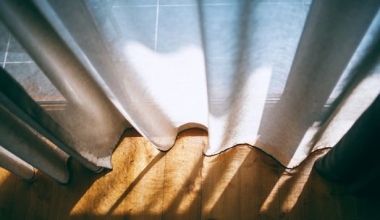
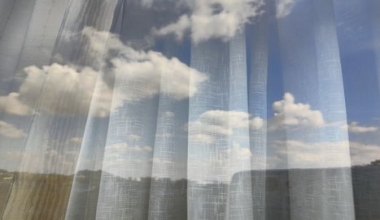
Sheer curtains are all about lightly diffusing light while maintaining some privacy. Organdy made from organic cotton, hemp muslin, or TENCEL™ Lyocell provide an airy feel with a low environmental impact. Natural sheers are surprisingly durable and can be composted at the end of their life.
Velvet Curtains
Plush velvet raises the bar on elegance. Eco-friendly velvet can be crafted from recycled polyester (rPET) or from cellulose fibers like cupro and rayon made from responsibly harvested wood. GOTS-certified organic cotton velvet exists but is rare and pricey. For a truly plant-based luxury, look for recycled velvet with a poly backing that's free from PFAS and phthalates.
Acoustic Curtains
Acoustic curtains absorb sound and reduce echo, which is essential in open-plan offices and recording studios. Many acoustic curtains use recycled felt or repurposed fabric scraps. Look for constructions with a dense inner layer of recycled PET (which boosts the noise reduction coefficient) or natural wool wadding. These sustainable options perform as well as their synthetic counterparts and often add a soft, tactile texture to the room.
Buying Guide: What to Consider
Before you purchase eco-friendly curtains, evaluate your priorities to ensure you pick the right fabric and style.
Performance Goals
- Light Control: If blackout is essential, check the fabric weight and weave. Triple-weave natural fabrics effectively block light.
- Thermal Insulation: Heavyweave curtains (like hemp or velvet) add an extra layer to keep heat in during winter and out in summer, reducing energy bills.
- Acoustic Insulation: For soundproofing, look for thick, multi-layered fabrics with a noise reduction coefficient (NRC) of 0.4 or higher.
- Indoor Air Quality: Avoid fabrics labeled "flame-retardant" unless they're clearly non-halogenated, as many chemical retardants off-gas VOCs.
Durability and Lifespan
Sustainable curtains should last. Natural fibers like linen and hemp are stronger after repeated washing. Check the thread count and finished weight. Look for quality stitching and reinforced headings. A durable curtain that you keep for a decade is far greener than a cheap one you replace every two years.
Cleaning and Care
Eco-friendly fabrics often have specific care instructions. Consider your lifestyle: if you need machine-washable, choose organic cotton or TENCEL™. If you're okay with professional dry-cleaning (which uses chemical solvents), linen or velvet are fine—but dry-cleaning reduces the eco benefits. Prefer air-drying to tumble drying to save energy.
Care Tips for Eco-Friendly Curtains
Proper care extends the life of your curtains and minimizes environmental impact. Follow these practices:
- Dust Regularly: Use a vacuum with a brush attachment on low suction to remove dust and allergens without washing.
- Wash Cold & Only When Needed: Most curtains only need washing a few times per year. Use cold water and an eco-friendly detergent free from optical brighteners and phosphates.
- Skip the Dryer: Line-dry your curtains to save energy and prevent shrinkage. Natural fibers like linen and hemp dry quickly.
- Steam Instead of Iron: To remove wrinkles, hang curtains in the bathroom while you shower, or use a handheld steamer. This avoids the electricity cost and creases.
- Repair, Not Replace: If a seam tears or a hook breaks, mend it. Address small rips immediately to avoid bigger damage.
- Recycle or Compost at End of Life: Pure natural fabric curtains can be composted. Mixed recycled polyester curtains can be sent to specialized textile recycling programs.
Industry Application Cases
Sustainable curtains are transforming various sectors. Here's how leading businesses are adopting them.
Hospitality Industry
Boutique hotels are switching to GOTS-certified organic cotton blackout curtains for guest rooms. This reduces guests' exposure to chemicals and supports a luxury feel. The Melbourne EcoLodge uses hemp-and-linen blends in its hallways to absorb sound and regulate humidity, cutting energy costs by 15% annually. By highlighting these choices to guests, they've attracted a loyal eco-conscious clientele.
Corporate Offices
Open-plan offices increasingly use acoustic curtains made from recycled PET felt to reduce noise distractions. A leading tech firm in Berlin installed TENCEL™ Lyocell sheers in its meeting rooms—improving daylight penetration and reducing glare on screens. The curtains are ultraviolet-resistant and meet the company's zero-landfill goals.
Residential Spaces
Homeowners are opting for organic velvet recycled-polyester curtains to add a touch of grandeur while cutting energy waste. A case study in Portland showed that installing triple-weave blackout hemp curtains reduced heating and cooling loads by 20% in a 1920s craftsman home. The homeowners noted the absence of chemical smells compared to conventional PVC-coated blackouts.
Make the Switch to Eco-Friendly Curtains
Eco-friendly curtains are not just a trend—they are a critical part of sustainable interior design. By choosing organic natural fibers or innovative recycled materials, you support a healthier planet and a healthier home. From light-filtering sheers to thorough blackout and acoustic solutions, the options are abundant and stylish. Start with one room, read labels for certifications, and commit to long-term care. Your windows can be both beautiful and kind to the Earth.
When you're ready to transform your space, explore our curated range of sustainable blackout, sheer, velvet, and acoustic curtain fabrics. Our experts can guide you toward the perfect eco-friendly solution for your project.