Why Boutique Hotels Need the Perfect Curtains
Boutique hotels are defined by their unique personality, intimate scale, and attention to detail. Every element in the room contributes to the guest experience, and curtains play a surprisingly central role. They are not just window coverings; they are design statements, sleep enhancers, and acoustic barriers. In a boutique setting, curtains must balance luxury aesthetics with practical performance, creating a space that feels both exclusive and restful. Guests expect blackout capability for deep sleep, soft sheers for dreamy daylight, and fabrics that dampen city noise. Getting the curtain strategy right can elevate guest satisfaction, boost online reviews, and justify premium room rates.
Unlike chain hotels, boutique properties often feature irregular windows, high ceilings, and unusual layouts. Off-the-shelf curtains rarely fit these spaces. Custom-made curtains in the right fabric ensure a flawless fit and a tailored look. But beyond fit, the choice of fabric directly affects light control, thermal insulation, acoustic comfort, and maintenance costs. This guide dives into the specific curtain fabrics and techniques that boutique hotel owners and designers need to know, from blackout linings to velvet pile heights and acoustic testing.
___PROTECTED_1___
Key Fabric Choices for Boutique Hotels
Selecting curtain fabric for a boutique hotel is a decision that involves more than color. The fabric must meet demanding performance criteria while retaining its visual appeal. The four most relevant fabric categories for boutique hospitality are blackout, sheer, velvet, and acoustic. Each solves a specific problem, and often a layered approach using two or more of these types is the best strategy.
Blackout Curtains for Guest Comfort
Blackout curtains are non-negotiable for hotel bedrooms. Guests equate darkness with quality sleep, and a study by the International Sleep Products Association found that room darkness significantly impacts restfulness. True blackout fabrics are made from tightly woven yarns or coated with a dark backing that blocks external light completely. For boutique hotels, consider triple-weave blackout fabrics that are also naturally flame-retardant and have a soft, matte finish. Avoid shiny PVC-coated imitations, as they can off-gas and crack over time. Look for fabrics with a black core or a white thermal coating that reflects heat in summer and retains warmth in winter, reducing your energy bills.
Practical tip: For recessed or non-standard windows, order blackout curtains with a telescopic rod and side channels to prevent light leakage from the edges. Always specify the exact width and drop, allowing for a 3-inch header and a 2-inch bottom hem. Test blackout performance by holding the fabric up to a bright light; if any pinholes appear, grade up to a heavier weave.
Sheer Curtains for Ambience and Light Control
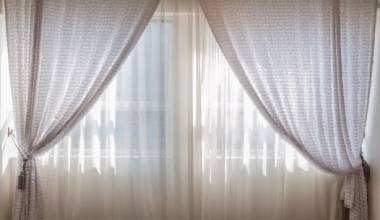
Sheer curtains are the layer of finesse in boutique hotel windows. They diffuse harsh sunlight, create a glowing veil of light, and offer privacy without fully blocking the view. In boutique settings, sheers are often used under blackout curtains or on a separate track, allowing guests to control the atmosphere throughout the day. Modern sheers come in linen blends, silk-like polyesters, and even fire-retardant voiles. For a high-end feel, choose a sheer with a subtle textural pattern that catches the light, such as a herringbone weave or an ombre effect.
Practical tip: When using sheers in a layering system, install the sheer track closest to the glass and the blackout track outside it. This prevents light gaps and allows independent operation. For floor-length sheers in tall rooms, add a decorative weighted hem to ensure they hang straight and don't billow into the room.
Velvet Curtains for Luxury and Insulation
Velvet is the quintessential boutique hotel fabric, evoking opulence, warmth, and sophistication. Its dense pile traps air, providing excellent thermal insulation and sound absorption. Velvet curtains in deep jewel tones—emerald, sapphire, or burgundy—can become the focal point of a suite. However, not all velvets are created equal. Cotton or cotton-blend velvets are breathable but can crush and lose their pile. Polyester velvets are durable, stain-resistant, and often more cost-effective for hospitality. Crushed velvet adds a softer, shimmering texture, while slub velvet offers a casual yet chic appeal. For high-traffic areas, opt for a velvet with a protective finish to resist dust and spills.
Practical tip: Velvet curtains are heavy, so they require robust tracks and brackets. Order samples before committing, and test how the velvet reacts to light at different times of the day. Dark velvets can make a room feel smaller, so use them in larger suites or as a full wall treatment behind the bed.
Acoustic Curtains for Noise Reduction
Urban boutique hotels often face the challenge of street noise. Acoustic curtains are specially engineered to absorb sound waves, reducing echo and dampening external noise. They are typically made of thick, multi-layer fabrics with a dense inner core, often labeled with a Noise Reduction Coefficient (NRC) or Sound Transmission Class (STC) rating. A good acoustic curtain can block up to 50% of outside noise, but they must be installed with a valance and sealed edges to create an effective sound barrier. For boutique properties near airports, nightclubs, or busy avenues, acoustic curtains are an investment in guest tranquility.
Practical tip: Pair acoustic curtains with double-glazed windows for maximum effect. Use floor-to-ceiling installations with a pelmet (top box) to prevent sound from entering via the top track. Some acoustic fabrics double as blackout and thermal liners, making them an excellent choice for rooms that serve both day and night functions.
___PROTECTED_2___
Curtain Hardware and Installation Tips
The finest fabric will underperform if the hardware is inadequate. For boutique hotels, the trend is toward motorized systems that integrate with smart room controls. Guests can open and close curtains with a bedside switch or mobile app, adding a modern luxury touch. Motorized tracks are especially useful for hard-to-reach windows or heavy velvet fabrics. When choosing tracks, consider the weight capacity—velvet and acoustic curtains can weigh over 2 kg per meter. Use steel or aluminum tracks with nylon rollers, and ensure the brackets are anchored into wood framing or masonry, not just drywall.
For a classic look, decorative rods in brushed brass or matte black complement a boutique aesthetic. However, rods with rings can let in light from the sides and top. A neat solution is a track with a professional 'S' folding tape, which creates uniform pleats and slides easily. Always order curtains slightly wider than the window (typically 1.5 to 2 times the width) to create full, lush folds. Install the curtain rod 8-12 inches above the window frame and extend it at least 4 inches on each side to allow the curtains to stack clear of the glass when open.
Care and Maintenance for Longevity
Hotel curtains endure daily use and must be easy to maintain without compromising fabric integrity. First, check the fire retardancy rating. Boutique hotels must meet local safety codes, and many fabrics can be treated with a durable flame-retardant finish. However, washing this finish can diminish its efficiency, so always follow the manufacturer's cleaning instructions. For day-to-day, regular vacuuming with a brush attachment removes dust and allergens, preventing fabric deterioration. For stains, spot-clean using a damp cloth and a mild detergent—no rubbing, as it can damage pile or weave.
Deep cleaning should occur at least annually. Some fabrics like blackout and acoustic are best dry-cleaned, while certain synthetics can be machine-washed on a delicate cycle. Velvet is high-maintenance; it should be steamed rather than ironed to restore pile. Sheer fabrics can be hand-washed in cold water and air-dried to avoid shrinkage. To prolong the life of curtains, protect them from direct, prolonged sunlight, as ultraviolet rays can fade colors and weaken fibers. Using a sheer backing or a UV-filtering window film helps.
Case Study: How a Boutique Hotel Transformed Its Rooms
Consider the example of a 20-room boutique hotel in a converted 19th-century warehouse. The original windows were large, south-facing, and lacked any blackout capability. Guests complained about early morning light and noise from the street-level restaurant. The hotel management decided to implement a layered curtain system. They installed a semi-transparent linen sheer on an inner track, a triple-weave blackout curtain on a motorized outer track, and added a custom pelmet that hid the mechanisms and blocked light from above. In the suites, they added a plush velvet curtain in a deep forest green, working as an additional decorative layer and acoustic buffer.
The results were dramatic. Guest satisfaction scores for sleep quality rose by 40% within two months. Noise-related complaints dropped by 70%. The motorized curtains became a highlight in online reviews, with guests praising the smart-room experience. The hotel manager noted that the energy savings from the insulated blackout layers reduced heating costs by 12% in winter. The total project cost was recouped in under 18 months through improved occupancy and the ability to charge a premium for “Design Suite” rooms. This case underscores that well-chosen curtains are a revenue-positive investment, not just an expense.
Buying Guide: What to Look For
When sourcing curtains for a boutique hotel, use this checklist to ensure you make the right purchasing decision.
- Durability: Choose fabrics with a high abrasion resistance (30,000+ double rubs on the Wyzenbeek test). Hotel curtains are opened and closed repeatedly, so reinforced seams (French seams or double-stitched hems) are essential.
- Flame Retardancy: Verify that the fabric meets local fire safety standards (e.g., NFPA 701 in the US, BS 5867 in the UK). Ask for test certificates.
- Light Blocking: If blackout is a priority, check the fabric’s opacity. True blackout means no light passes through, even under direct sunlight. Some designs combine a blackout core with a decorative face fabric.
- Acoustic Performance: For noise reduction, request NRC ratings. A minimum NRC of 0.15 is acceptable, but for high-noise areas, aim for 0.30 or higher.
- Tear and Stain Resistance: Some fabrics have a nano-coating that repels liquids and stains, which is a boon in hospitality. Ask for a spill test demonstration.
- Color Fastness: Ensure the fabric is rated AATCC 3 or higher for lightfastness, so colors don’t fade after months of sun exposure.
- Availability and Lead Time: For custom orders, confirm lead times and request a strike-off (sample of the actual weave) before full production. This avoids costly mistakes.
Comparing Fabric Types at a Glance
| Fabric Type | Key Benefits | Best Used For | Care Level |
|---|---|---|---|
| Blackout | Complete light blockage, thermal insulation | Bedrooms, street-facing windows | Spot clean, dry clean |
| Sheer | Diffuses light, adds elegance, privacy | Living areas, under blackout curtains | Hand wash or delicate cycle |
| Velvet | Luxury feel, sound absorption, insulation | Suites, accent walls, heavy drapery | Steam cleaning, professional care |
| Acoustic | Reduces noise, multi-layer Dense | City hotels, noisy corridors | Vacuum, dry clean |
Conclusion
Curtains for boutique hotels are far more than a finishing touch. They are an essential tool for guest comfort, design expression, and operational efficiency. By selecting the right combination of blackout, sheer, velvet, and acoustic fabrics, you can craft rooms that feel both indulgent and functional. Remember to invest in quality hardware, plan for easy maintenance, and consider motorization for a modern edge. Whether you are renovating a historic property or launching a new concept, let your curtain strategy be as thoughtful as your interior design. The result will be satisfied guests, standout reviews, and a space that truly defines the boutique experience.