Bay windows are a spectacular architectural feature, flooding your room with natural light and creating a cozy nook that begs for stylish window treatments. But their angled, three-panel structure also poses a unique challenge: standard curtain rods won't work, and finding the perfect balance between privacy, light control, and aesthetic appeal requires careful thought. In this comprehensive guide, we’ll explore curtain ideas for bay windows, from hardware solutions and fabric choices to installation tips and design inspirations. Whether you’re renovating a living room or adding elegance to a bedroom, you’ll discover actionable strategies to make your bay window the focal point it deserves to be.
Understanding Bay Window Curtain Challenges
Bay windows typically consist of three or more windows set at an angle, creating a protruding nook. This design introduces several specific challenges when it comes to curtains:
- Angled corners: Standard straight curtain rods cannot bend around the angles, requiring flexible tracks or specially designed rods.
- Light leakage: Even a small gap at the corners can let in unwanted light, especially in bedrooms or media rooms.
- Privacy & heat retention: The multiple glass panes increase heat loss in winter and heat gain in summer, making curtain insulation critical.
- Furniture integration: Bay windows often house window seats, radiators, or cozy reading areas, so curtain hardware must not interfere.
By addressing these challenges head-on, you can create a window treatment that is both functional and stunning.
___PROTECTED_1___
Choosing the Right Curtain Style for Bay Windows
The most important decision is selecting a style that works with the geometry of your bay. Here are the top curtain styles that professionals recommend:
1. Curved Curtain Tracks (Bendable Tracks)
These are the most popular and practical solution for bay windows. Made from flexible aluminum or PVC, these tracks can be bent to match the exact angle of your bay. They can be ceiling-mounted or wall-mounted and often feature gliders that allow smooth, continuous movement of curtains across all panels. This is ideal for opening the entire window when you want maximum light.
For best results, choose a track with a corded draw system so you can open and close the curtains with one hand—especially useful if the window is behind furniture.
2. Bay Window Curtain Rods with Angled Connectors
If you prefer the look of traditional curtain rods, you can purchase bespoke bay window rods that join at custom angles. These rods typically come in metal or wood and offer a more decorative appearance. The downside is that they may not open as smoothly— curtains can snag at the joints. Make sure to use extra gliders and ring carriers at the corners to minimize friction.
3. Individual Curtain Panels per Window
Instead of one continuous curtain, install a separate rod or track above each window pane. This works well if you want to operate each curtain independently or if the bay is shallow. Use sheer panels for a light, airy look, or combine different opacities for flexibility. For a cohesive design, choose rods that follow the frame lines without breaking the visual flow.
4. Roman Blinds or Pleated Shades Inside Each Bay Panel
Roman shades and cellular shades are excellent for bay windows because they fit neatly inside each window frame, avoiding the hardware challenge altogether. They provide a clean, tailored look and are especially effective in small spaces or when you have a window seat. For light control, opt for blackout fabrics; for softness, consider a fabric shade with a liner.
5. Sheer Curtains for a Flowing Effect
Sheer curtains on a curved track create a dreamy, ethereal atmosphere in a bay window. They diffuse sunlight beautifully while offering daytime privacy. To enhance the effect, layer sheers with blackout or velvet curtains on the same track (using two tracks or a combination track) to switch between sheer and opaque coverage.
___PROTECTED_2___
Fabric Choices for Bay Windows: Blackout, Sheer, Velvet, and Acoustic
The fabric you choose will dramatically affect the mood, functionality, and energy efficiency of your bay window. Here’s a breakdown of popular options:
| Fabric Type | Best For | Pros | Cons |
|---|---|---|---|
| Blackout | Bedrooms, media rooms | Blocks 99% of light, improves sleep, insulates against heat/cold | Can look heavy, limited color options for true blackout |
| Sheer | Living rooms, dining areas | Softens light, provides daytime privacy, airy look | Offers little privacy at night, minimal insulation |
| Velvet | Formal lounges, winter coziness | Luxurious texture, excellent thermal insulation, rich color depth | Heavy, may require reinforced hardware, can fade in direct sun |
| Acoustic | Home offices, city apartments | Reduces noise pollution, often made with thick layers, adds weight | Can be bulky and more expensive |
Combining Fabrics: The Layering Strategy
For ultimate versatility, layer sheer curtains with heavier blackout or velvet curtains. During the day, keep the sheers closed to filter light and add privacy; at night, pull the blackout curtains for complete darkness and sound reduction. Use a dual-track system (one for sheers, one for heavier curtains) to maintain smooth operation.
Measuring and Fitting Bay Window Curtains
Accurate measurement is critical—a well-fitted curtain looks professional, while mis-measured ones can ruin the entire aesthetic. Follow these steps:
- Measure each pane individually: Note the width and height of each window section. Add allowances for the pole or track position.
- Decide on mounting: Will you mount inside the recess or outside? Outside mounting gives a grander look and can make the window appear larger.
- Determine the drop: Curtains can be sill-length (breaking at the sill), below-sill, or floor-length. For bay windows with a seat, choose curtains that skim the seat or puddle slightly for elegance.
- Calculate curtain fullness: For a luxurious gather, the fabric width should be 2 to 2.5 times the track width. For sheers, 3 times fullness is common.
- Include return brackets: For a neat finish, use a track that extends 5-10 cm beyond the outer edges to prevent light gaps.
Curtain Hardware: Poles, Tracks, and Corner Solutions
Selecting the right hardware is as important as the fabric itself. Here’s what you need to know:
- Flexible Tracks: These are your safest bet for bay windows. Modern design has flexi-tracks that can be bent on-site to any angle, and they are virtually invisible when covered by a pelmet. They can be used with eyelet, pencil pleat, or pinch pleat headings.
- Corner Brackets: Ensure the track has specially designed corner brackets that keep the curtains from getting stuck. For extra smoothness, use a track with nylon gliders.
- Pole Systems: If you prefer poles, look for a bay-window-specific pole system that uses adjustable elbow joints. You may need additional support brackets at each corner to bear the weight.
- Motorization: Bay windows often have awkward corners; motorized curtains make operation a breeze. They are especially useful for high bay windows or those with furniture in the way.
Design Ideas: Patterns, Colors, and Layering
Now for the fun part—styling your bay window. Here are some creative ideas:
Emphasize the Nook with a Focal Point
Use your bay window as a reading corner. Add a comfortable window seat with cushions and a throw, then frame it with floor-to-ceiling velvet curtains in a rich jewel tone like emerald or sapphire. This creates a cozy, inviting alcove.
Create a Seamless Flow with Sheer Whites
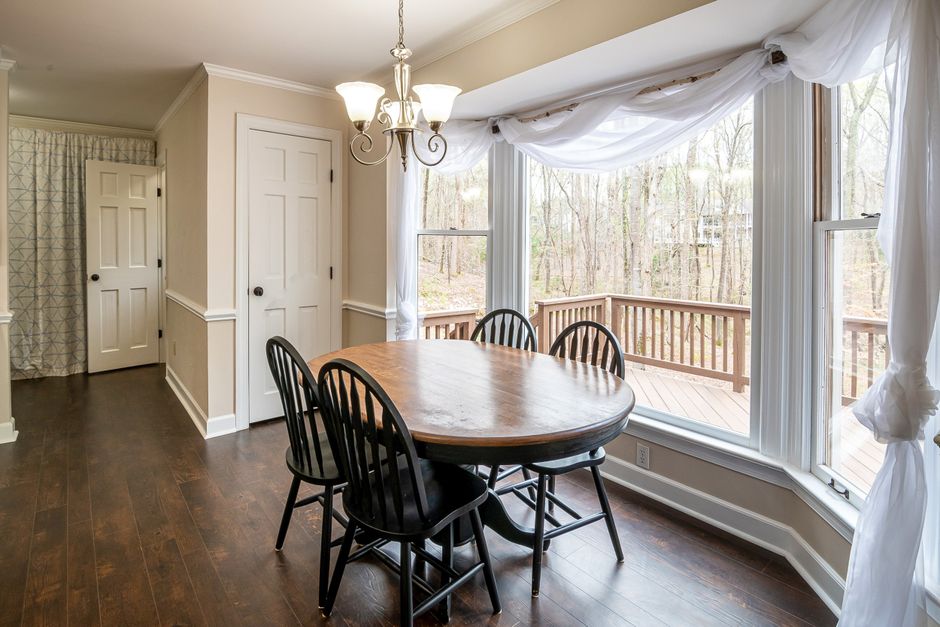
In a minimalist or Scandinavian-inspired room, opt for white or ivory sheer curtains on a ceiling-mounted track. This makes the ceiling feel higher and softens the angular geometry, letting the views shine. Pair with light wood flooring for an airy vibe.
Mix Patterns for a Playful Look
Don't be afraid to mix patterns: florals, stripes, and geometric prints can coexist if they share a common color palette. For a bay window, use the same fabric on all three panels to maintain cohesion. If you want more depth, alternate two complementary patterns.
Use Blackout Curtains for a Home Theater
If you’re converting a bay window in a media room, choose blackout curtains in a dark charcoal or navy. Add an acoustic backing to reduce echo and external noise. This is both practical and stylish, especially with a dimmer-controlled ceiling light.
Layer with a Pelmet or Valance
To hide the track and create a polished finish, install a pelmet (a covered board) or a fabric valance. This is particularly useful with bay windows as it also helps insulate against drafts at the top.
Curtain Trends for Bay Windows in 2025
Stay ahead of the curve with these emerging trends:
- Sustainable Fabrics: Organic cotton, linen, and recycled polyester are gaining popularity. For bay windows, natural fibers like linen offer a relaxed, breezy vibe that complements the light.
- Acoustic Curtains: As open-plan living becomes common, noise reduction is a priority. Acoustic curtains with dense layers and special pleats are now available in beautiful colors and textures.
- Smart Curtains: Integrating bay window curtains with smart home systems allows for voice-activated opening and scheduling—perfect for the in-demand convenience.
- Bold Color Blocking: Using different colors on each bay panel can create a striking artistic effect. For example, a gradient from light to dark in the same hue adds depth.
- Double Rods: Installing two rods allows you to layer sheers and blackout curtains, but also to mix styles, such as a sheer base with a patterned top layer.
Maintenance and Care Tips for Bay Window Curtains
Bay windows are exposed to more sunlight and dust, so regular upkeep is essential. Here’s how to keep your curtains looking fresh:
- Dust weekly: Use a vacuum with a brush attachment or a lint roller to remove dust from the fabric’s surface.
- Check washing instructions: Sheer and cotton curtains are often machine washable, but velvet and blackout curtains may require professional cleaning. Always test a small area first.
- Rotate the folds: To prevent permanent creasing and fading in the sun, periodically alter the folds by closing and opening the curtains at different widths.
- Protect from sun damage: Add a UV-protective liner to delay fading, especially for dark or silk-like fabrics.
- Lubricate the track: Every few months, apply a silicone-based lubricant to avoid sticking.
- Deep-clean on time: Remove and clean curtains every 6-12 months, or sooner if you notice allergens or stains.
Common Mistakes to Avoid
Avoid these pitfalls to ensure a flawless bay window treatment:
- Using a single straight rod across the bay—it will leave gaps and look unattractive.
- Choosing curtains that are too short; for a dramatic look, curtains should break at the floor or just above.
- Forgetting about heat gain; in south-facing bays, use thermal linings to prevent the room from overheating.
- Overcrowding the window with too many patterns—simplicity often works best.
Frequently Asked Questions
Can I use standard curtain rods in a bay window?
No, standard rods are straight and cannot bend around the bay’s angles. You need either a flexible track or a bay-window-specific pole system.
What is the best way to block light in a bay window?
Install blackout curtains on a curved track that extends beyond the outer edges of the window. Also, consider cellular shades for additional insulation.
How can I make my bay window look bigger?
Hang curtains as high and wide as possible. Use long vertical lines and sheer fabrics to make the ceiling feel taller and the space more open.
Are motorized curtains worth it for bay windows?
Yes, motorized curtains add convenience and are safer for hard-to-reach windows. They also prevent wear and tear on the fabric due to smooth, consistent movement.
Conclusion
Bay windows are a blessing that deserve thoughtful curtain styling. From versatile curved tracks to luxurious velvet drapes, the options are endless. Start by measuring your space, choose a hardware system that suits your bay’s angle, and then layer fabrics to achieve the perfect balance of light, privacy, and comfort. With the right curtain ideas for bay windows, you can transform this architectural feature into your favorite corner of the home—whether that’s a sunlit reading nook, a serene sleeping retreat, or a stylish entertainment hub. For a truly custom finish, consult a professional curtain specialist who can tailor a solution to your exact measurements.