Curtains are a long-term investment in your home’s comfort, privacy, and style. But nothing is more frustrating than watching your beautiful drapery fade, fray, or tear after just a few seasons. The secret to decades of satisfactory service lies in understanding curtain fabric durability before you make a purchase. This comprehensive guide will teach you exactly what makes a curtain fabric durable, how to test it, and how to care for it, so your curtains stay beautiful for years to come.
What Makes a Curtain Fabric Durable?
Durability in curtain fabric is not a single quality but a combination of several factors. Understanding these elements will help you evaluate any material with confidence.
1. Fiber Type
The source of the fiber—natural or synthetic—plays a huge role in strength and longevity. Polyester is one of the most durable curtain fibers, resisting UV damage and abrasion well. Nylon is even stronger but can be prone to fading. Among natural fibers, linen can be strong but brittle, while cotton is comfortable but may weaken with repeated washing or prolonged sun exposure.
2. Weave Tightness
A tight, high-thread-count weave prevents moisture and dirt from penetrating the fabric, reducing internal wear. Fabrics like canvas, twill, or sateen are tightly woven and therefore more durable than loose open-weave fabrics like gauze or sheer organza.
3. Finishing and Treatments
Many curtain fabrics receive finishes like stain repellents, UV inhibitors, or mildew resistance. These treatments add a protective layer that significantly extends the fabric’s lifespan. For example, a blackout lining with a metallic coating not only blocks light but also protects the face fabric from sun damage.
4. Construction Quality
Looks matter, but so does the way the fabric is engineered. Look for double hemmed edges, reinforced heading tapes, and strong stitching. A fabric that is poorly made will fail at stress points regardless of the fiber’s durability.
___PROTECTED_1___
Key Durability Factors for Different Fabrics
Not all fabrics are created equal. Here’s how popular curtain materials rank in terms of longevity.
- Polyester: The champion of durability. It resists most types of damage and is easy to clean. High-quality polyester can look like natural fabrics.
- Linen: Trendy but tricky. 100% linen can be brittle after prolonged sun exposure and tends to crease. A blend with cotton or polyester increases durability.
- Cotton: Durable when woven tightly, but it can shrink and fade. Washable cottons are better for less intense sunlight.
- Velvet: Durability depends on the backing and fiber. Cotton velvet is heavy and durable, while viscose velvet may crush and wear quickly. Look for velvet with a woven backing for extra strength.
- Acrylic: A synthetic that can mimic wool, it is resistant to sun damage and shrinkage. However, it may pill over time.
- Bamboo and Hemp: Eco-friendly and naturally strong, these fibers can be very durable but may feel rough.
___PROTECTED_2___
The Most Durable Curtain Fabrics: A Comparative Table
| Fabric Type | Durability Rating | Best Use | Maintenance |
|---|---|---|---|
| 100% Polyester | Excellent | Everyday curtains, blackout linings | Machine washable, quick dry |
| Cotton-Polyester Blend | Very Good | Living areas, children’s rooms | Easy care, resists shrinking |
| Linen-Cotton Blend | Good | Casual, breathable spaces | Dry clean or gentle wash |
| Cotton Sateen | Good | Decorative curtains with lining | Dry clean recommended |
| Sheer (Polyester/Voile) | Moderate | Privacy with light filtering | Hand wash, low iron |
| Velvet (Cotton/Polyester) | Good to Very Good | Formal rooms, insulation | Spot clean or dry clean |
| Acoustic Curtains (Heavy Polyester) | Excellent | Auditoriums, home theaters | Vacuum regularly |
How to Test Curtain Fabric Durability Before Buying
Don’t rely on guesswork. Here are simple tests you can do at a fabric store to estimate durability.
The Rub and Grab Test
Gently rub the fabric between your fingers. Does it feel smooth or does it catch? Pilling and fuzz indicate weakening fibers. Pull the fabric diagonally – if it distorts easily, it will lose its shape over time.
The Light Test
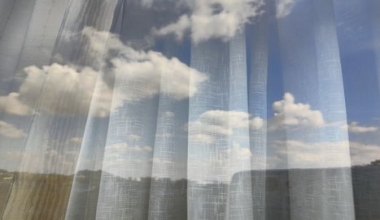
Check for visible light transmission by holding the fabric to a window. High light penetration means the fabric is not tightly woven and will fade faster in bright environments.
The Scrunch Test
Scrunch the fabric in your fist and release it. If it springs back without lasting creases, it resists deformation. Heavy crushing could lead to permanent marks and wear.
Abrasion Resistance (Martindale Test)
For professional assurance, look for the Martindale rating. This measures how many cycles of friction the fabric can withstand before wearing a hole. For curtains, a rating of 20,000 cycles is good for light use, 30,000-40,000 for regular residential use, and 50,000+ for heavy duty applications.
Signs of Wear and Tear in Curtains
Even the most durable fabrics will eventually show signs of aging. Catching these early can save you money.
- Fading: Uneven color or loss of pigment is usually caused by UV exposure. Dyes break down over time, and cheap dyes fade faster.
- Fraying: Look at the edges and seams for loose threads. This is often due to rubbing against window frames or faulty construction.
- Holes: Sunlight, insects, or static can create small holes. Acoustic curtains are particularly susceptible if their density attracts dust mites.
- Lining deterioration: If the backing becomes brittle or cracks, the curtain's insulation and light-blocking abilities are compromised.
Practical Tips to Extend the Life of Your Curtains
Maximize your investment with these simple habits.
- Use a lining: A blackout or protective lining acts as a shield against sun and dust. It can double the life of your face fabric.
- Rotate your curtains: If you have two sets, swap them seasonally to distribute light exposure evenly.
- Vacuum regularly: Dust accumulates and works into the weave, accelerating abrasion. A soft brush attachment once a month works wonders.
- Avoid direct sunlight when possible: Use sheers or sheer blinds behind drapes to catch the initial UV rays.
- Clean carefully: Follow the care label. Many fabrics should be dry-cleaned only. If machine-washing is permitted, use a gentle cycle with cold water and mild detergent.
- Check hardware: Ensure curtain rings don't have sharp edges, and that the rod is not sagging, which puts uneven stress on the fabric.
Durability Meets Performance: Blackout, Sheer, Velvet, Acoustic
Now, let's focus on the specialty fabrics that this site covers. Each has unique durability considerations.
Blackout Curtains
Blackout curtains often have multiple layers, including a coating of acrylic or foam. The durability of the overall fabric depends on the facing material. High-quality blackout fabric uses a 3-pass coating that does not crack or peel. They are generally very durable, but the coating can degrade in extreme heat or if folded repeatedly. Choose blackout curtains with a woven polyester face for the best blend of light blocking and longevity.
Sheer Curtains
Sheer fabrics are inherently fragile because their charm lies in lightness and transparency. However, polyester sheers are far more durable than natural silk sheers. Look for a high thread count in sheer fabric; it will resist tears better. Sheers should be installed outside of direct sunlight or paired with backing to prevent UV damage. When washing, use a mesh laundry bag to protect them from snagging.
Velvet Curtains
Velvet is luxurious but demands careful attention. Crush-resistant velvet, often made from polyester or nylon, is more durable than standard viscose velvet. Cotton velvet is durable but can shrink if washed. Always line velvet curtains to reduce friction against the window facing and prevent pile crushing. Regular steam cleaning can help the pile spring back.
Acoustic Curtains
Acoustic curtains are engineered for sound absorption, typically using dense, multi-layered polyester or fiberfill. These are among the most durable curtains due to their heavy-duty construction. They resist dragging and abrasion, but their sheer weight can stress the rod and heading tape. Use a sturdy track and ensure that the fabric has a reinforced header. Clean acoustic curtains with vacuuming rather than washing to preserve their soundproofing properties.
When to Repair vs. Replace Your Curtains
Sometimes a small fix can extend the life of your curtains significantly. Expert knowledge can save you money.
Repair if: The damage is minor, like a small hole that can be patched with a matching thread, a seam that has come undone, or a hem that needs re-stitching. Also, if only the lining is damaged, it can be replaced without buying new curtains.
Replace if: The fabric has become brittle or has lost its structural integrity (e.g., tearing in multiple places), if there are severe stains that don't come out, or if the fabric has faded irreversibly causing an ugly mismatch with your interior. For acoustic or blackout curtains, if the performance drops significantly (e.g., light leaks through or echo returns), it's time for a new set.
Conclusion
Durability is the cornerstone of any great curtain purchase. By focusing on fiber, weave, and finishing, you can choose fabric that will serve you for a decade or more. Remember to test materials in-store, understand the unique needs of blackout, sheer, velvet, and acoustic curtains, and adopt a consistent maintenance routine. With this guide, you're fully equipped to make a wise investment in your home or commercial space. Choose quality, care well, and enjoy beautiful, long-lasting curtains.