Recycled polyester is a synthetic fiber made from post-consumer plastic waste, primarily PET (polyethylene terephthalate) bottles, and post-industrial polyester scraps. It is a sustainable alternative to virgin polyester, reducing reliance on petroleum and diverting waste from landfills. In the curtain fabric industry, recycled polyester is increasingly used to produce blackout, sheer, velvet, and acoustic curtains, offering performance comparable to virgin materials while supporting eco-conscious manufacturing. This guide explores everything you need to know about recycled polyester—from its production process to its benefits in home and commercial textiles.
What is Recycled Polyester?
Recycled polyester, also known as rPET (recycled polyethylene terephthalate), is a polymer fiber created by melting down existing plastic products and re-spinning them into new fibers. Unlike virgin polyester, which is derived from crude oil, recycled polyester uses waste materials that would otherwise end up in oceans or landfills. It retains the same chemical structure as virgin polyester but requires significantly less energy to produce.
Common sources include:
- PET bottles – The most common source; clear plastic bottles for water, soda, and other beverages.
- Post-industrial waste – Scraps and off-cuts from textile manufacturing.
- Recycled fabrics – Garments or textiles collected through take-back programs.
___PROTECTED_1___
How is Recycled Polyester Made?
The production of recycled polyester involves several stages:
- Collection and sorting – Plastic bottles are collected from recycling streams, sorted by color and type.
- Cleaning and shredding – Bottles are washed, labels removed, and crushed into small flakes.
- Melting and extrusion – The flakes are heated to form a liquid polymer, which is pushed through a spinneret to create fine filaments.
- Spinning and drawing – The filaments are stretched and twisted to improve strength and texture.
- Texturing and cutting – Fibers can be textured for softness or cut into staple lengths for spinning into yarn.
- Fabric weaving/knitting – The yarn is then woven or knitted into curtain fabrics, often blended with other fibers like cotton or viscose for added performance.
___PROTECTED_2___
Recycled Polyester in Curtain Fabrics
Recycled polyester is versatile and can be engineered for various curtain types:
Blackout Curtains
Recycled polyester is commonly used in blackout linings and triple-weave fabrics. Its dense fiber structure blocks light effectively. Many eco-friendly blackout curtains are made from 100% recycled polyester, offering thermal insulation and energy savings.
Sheer Curtains
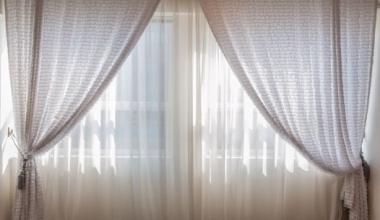
For sheer curtains, recycled polyester provides a lightweight, airy feel with high tensile strength. It resists wrinkling and fading, making it ideal for maintaining a crisp appearance in living rooms or bedrooms.
Velvet Curtains
Velvet fabrics benefit from recycled polyester's ability to hold a plush pile. Recycled polyester velvet has a luxurious hand feel and excellent drape, often used in theaters and high-end homes. It is also more affordable than silk velvet.
Acoustic Curtains
Acoustic curtains designed for sound absorption often incorporate heavy recycled polyester felt or multi-layer constructions. The fiber density helps dampen noise, making them suitable for offices, recording studios, and open-plan spaces.
Benefits of Recycled Polyester Curtains
- Environmental impact – Producing recycled polyester saves up to 50% energy and reduces CO2 emissions by 70% compared to virgin polyester. It also keeps plastic out of landfills and oceans.
- Durability – Recycled polyester is highly resistant to stretching, shrinking, mildew, and pests. Curtains last longer, reducing replacement waste.
- Performance – It offers excellent lightfastness (color retention), quick drying, and easy care—many curtains are machine washable.
- Thermal properties – Its insulating ability helps regulate room temperature, lowering heating and cooling costs.
- Circular potential – Some recycled polyester curtains can be recycled again at the end of life, supporting a circular economy.
Recycled Polyester vs. Virgin Polyester: A Comparison
| Property | Recycled Polyester | Virgin Polyester |
|---|---|---|
| Raw material | PET bottles, waste textiles | Crude oil (petroleum) |
| Energy consumption | ~50% less than virgin | High (energy-intensive) |
| Carbon footprint | Up to 70% lower CO2 | Higher emissions |
| Fiber quality | Identical chemical structure; may vary slightly in tensile strength | Consistent, high quality |
| Cost | Often slightly higher due to processing | Lower (economies of scale) |
| End-of-life | Can be recycled again | Difficult to recycle; often incinerated |
Care Tips for Recycled Polyester Curtains
Recycled polyester curtains are generally low-maintenance. Follow these tips for longevity:
- Washing: Machine wash in cold or warm water (max 40°C / 104°F). Use a gentle cycle to reduce pilling.
- Detergent: Use a mild, eco-friendly detergent. Avoid bleach or fabric softeners that can degrade fibers over time.
- Drying: Tumble dry on low heat or air dry. High heat can cause shrinkage or damage.
- Ironing: If needed, iron on a low setting (synthetic mode) while the fabric is slightly damp. Use a pressing cloth to avoid shine.
- Stain removal: Spot clean with a damp cloth and mild soap. Avoid harsh scrubbing.
Is Recycled Polyester Sustainable?
While recycled polyester offers clear environmental advantages over virgin polyester, it is not without criticism. Key considerations include:
- Microplastic shedding – Like all synthetic fabrics, recycled polyester can release microplastics during washing. Use a microplastic-catching laundry bag or guppyfriend.
- Downcycling potential – Some recycled polyester is blended with other fibers, making it harder to recycle again. Look for mono-material products.
- Water and chemical use – The dyeing and finishing processes still require water and chemicals, though some mills use closed-loop systems.
- Certifications – Look for GRS (Global Recycled Standard) or OEKO-TEX certifications to ensure genuine recycled content and responsible production.
Overall, recycled polyester is a more sustainable choice compared to virgin polyester, especially when combined with renewable energy and responsible manufacturing.
Frequently Asked Questions
Is recycled polyester as durable as virgin polyester?
Yes, recycled polyester has comparable strength, elasticity, and resistance to wear. Some studies show it can even be slightly stronger due to the reprocessing.
Can recycled polyester curtains be recycled again?
Yes, if they are made from 100% polyester without coatings or blends. Check with local recycling facilities or manufacturer take-back programs.
Does recycled polyester cause allergies?
Recycled polyester is hypoallergenic and holds dust mites, making it suitable for allergy sufferers. Regular washing is recommended.
How can I tell if a curtain is made from recycled polyester?
Look for labels stating “100% recycled polyester” or certifications like GRS. Some brands include a care tag with the recycled content.
Conclusion
Recycled polyester is a game-changer for sustainable curtains. It delivers the same performance as virgin polyester while reducing environmental footprint. Whether you need blackout, sheer, velvet, or acoustic curtains, you can find eco-friendly options made from recycled materials. By choosing recycled polyester curtains, you invest in durability, energy efficiency, and a cleaner planet. Explore our collection of recycled polyester curtains today and make a responsible choice for your home or business.