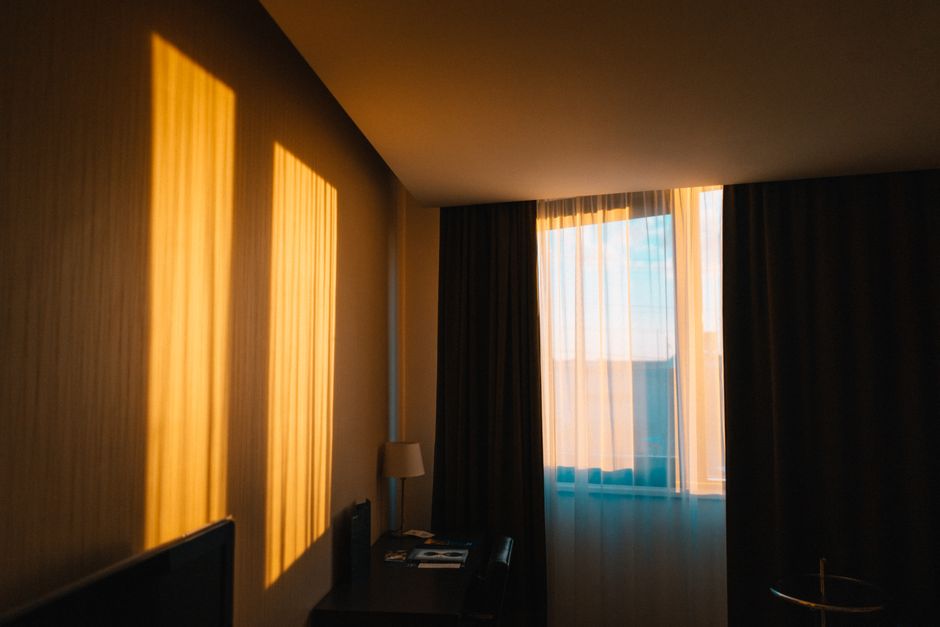
1. Blackout Curtains: The Ultimate Insulator
Blackout curtains are made from tightly woven, opaque fabrics that block nearly all external light. Their dense construction also creates a thermal barrier, significantly reducing heat transfer through windows. In winter, they trap indoor warmth, while in summer they reflect solar radiation, keeping rooms cooler. Studies show blackout curtains can reduce heat loss by up to 25% and lower cooling costs by similar margins.
For maximum insulation, choose blackout curtains with a triple-weave construction or an added foam backing. These layers not only block light but also provide an extra thermal resistance. Common materials include polyester, microfiber, and cotton blends. When hung ceiling-to-floor and overlapped in the center, they minimize drafts and heat leakage around edges.
Installation tip: combine blackout curtains with a track system that seals the curtain against the wall. This eliminates air gaps and enhances thermal performance. For a comprehensive solution, pair them with a thermal lined curtain to double the insulating effect.
___PROTECTED_1___
2. Thermal-Lined Curtains: Enhancing Any Fabric
Thermal linings are add-on layers that can be attached to the back of any curtain fabric, instantly upgrading its insulating power. Common lining materials include polyester fleece, flannel, or foam. The lining creates a dead air pocket between the window and the room, which acts as a thermal buffer. This method is cost-effective because you can keep your existing decorative curtains while gaining insulation benefits.
When selecting a thermal lining, look for options with a reflective layer (like aluminized polyester) that reflects heat back into the room. Some linings include a magnet strip or Velcro to attach directly to the window frame, further reducing air leakage. Typical thermal linings increase the R-value (thermal resistance) of curtains by 1.5 to 2 times.
For best results, use thermal linings on heavy fabrics like velvet or suede, as the combined weight helps the curtain hang flat and close tightly. Avoid lightweight fabrics that may sag and create gaps. Professional installation ensures the lining is evenly distributed and does not bunch up.
___PROTECTED_2___
3. Velvet Curtains: Luxury Meets Warmth
Velvet curtains are renowned for their thick, plush texture, which naturally provides excellent thermal insulation. The dense pile of velvet traps air between the fibers, slowing heat transfer. Velvet’s weight also helps curtains hang close to the window, reducing air movement. Historically, velvet was used in castles and mansions to keep rooms warm.
Modern velvet curtains are often made from cotton, polyester, or blended fibers. Cotton velvet is breathable yet insulating, while polyester velvet is more durable and wrinkle-resistant. For thermal performance, choose a high-quality velvet with a substantial weight (at least 300 gsm). Darker colors absorb more heat, which can be beneficial in winter but less so in summer.
Care tip: velvet may require dry cleaning to maintain its pile. However, some blended velvets are machine washable. To avoid crushing the fibers, store curtains loosely. The plush texture also acts as a sound absorber, providing dual benefits of thermal and acoustic insulation.
4. Sheer Curtains with Thermals: The Layering Approach
On their own, sheer curtains offer minimal thermal insulation due to their lightweight, semi-transparent nature. However, when layered with thermal curtains or lined sheers, they can contribute to insulation by reducing direct sunlight and creating a buffer zone. A common solution is to purchase sheer curtains with a built-in thermal liner or use double rods to hang sheers behind heavier drapes.
For example, a white thermal sheer can reflect up to 70% of solar heat while still allowing diffused light. These sheers are often made from a finely woven polyester with a reflective coating. When paired with blackout or velvet curtains, the combination provides both light control and insulation.
Strategy: during the day, keep the thermal sheer closed to reduce solar gain, and at night, close the heavier curtains for maximum warmth. This approach is ideal for rooms that need both natural light and temperature regulation, such as living rooms or home offices.
5. Acoustic Curtains: Soundproofing and Thermal Benefits
Acoustic curtains are designed to absorb sound, but their dense, multi-layered construction also offers significant thermal insulation. These curtains typically consist of several layers: a thick core of polyester or cotton, a mass-loaded vinyl (MLV) barrier, and a decorative outer fabric. The MLV adds substantial weight and blocks both sound and heat.
Acoustic curtains can achieve R-values comparable to heavy blackout curtains. They are ideal for rooms facing noisy streets or adjacent to machinery. The thermal benefits come from the same mass and air gaps that dampen sound. In winter, they prevent heat loss; in summer, they block heat from entering.
Installation: acoustic curtains should cover the entire window and extend beyond the frame to minimize flanking. Use a ceiling-mounted track to prevent gaps at the top. They are heavier than standard curtains, so ensure the hardware can support the weight.
6. Cellular (Honeycomb) Shades: A Modern Thermal Marvel
While not traditional curtains, cellular shades (also called honeycomb shades) are fabric window coverings with a unique cellular structure that traps air in multiple pockets. This design provides outstanding thermal insulation, often outperforming conventional curtains. The cells can be single, double, or triple layers, each adding R-value. Triple-cell shades can achieve an R-value of 5.0 or higher.
These shades are available in a range of fabrics, from light-filtering to blackout. The insulation works by creating a barrier of dead air that slows heat conduction. In summer, they reduce solar heat gain; in winter, they keep warmth inside. They are especially effective in extreme climates.
Consider: cellular shades are custom-fitted inside or outside the window frame. They do not have the decorative drape of curtains, but they can be paired with curtains for a layered look. They are also motorized options for convenience. Their compact design makes them ideal for small spaces or minimalist interiors.
7. Thermal Backed Roller Shades: Sleek and Functional
Roller shades with a thermal backing are a simple, cost-effective option for thermal insulation. These shades consist of a single panel of fabric with a reflective or foam backing. When lowered, they form a tight seal against the window, reducing air infiltration. The reflective side (often aluminum) bounces heat back inside during winter and reflects solar heat outside during summer.
Thermal roller shades are available in various opacities. For maximum insulation, choose the blackout version with a dual-layer foam core. They roll up neatly out of sight, making them a space-saving solution. Installation can be inside or outside mount. For improved thermal performance, use an outside mount with a cassette housing to further block drafts.
Comparison: roller shades are less expensive than cellular shades and offer a modern, clean look. They are easy to clean with a damp cloth. However, they may not provide the same level of insulation as cellular shades or heavy drapes. They are best used in combination with other treatments for optimal efficiency.
| Fabric Type | R-Value Range | Best Suited For |
|---|---|---|
| Blackout Curtains | 1.5 – 3.0 | Bedrooms, media rooms |
| Thermal-Lined Curtains | 2.0 – 4.0 | Any room with existing drapes |
| Velvet Curtains | 2.0 – 3.5 | Living rooms, formal spaces |
| Sheer + Thermal combo | 1.0 – 2.5 | Daytime insulation, layered look |
| Acoustic Curtains | 2.5 – 5.0 | Noisy areas, home theaters |
| Cellular Shades | 3.5 – 5.5 | Extreme climates, minimal style |
| Thermal Roller Shades | 1.0 – 2.5 | Budget-friendly, modern spaces |