Introduction
Creating the perfect home theater involves more than a high-definition projector and surround sound system. Acoustic treatment is a critical component that often gets overlooked—room reflections and echoes can muddy dialogue and distort audio. The right acoustic curtain fabric can dramatically reduce reverberation, improve speech clarity, and enhance the immersive experience. This comprehensive guide covers everything you need to know about selecting the best fabric for your home theater, from understanding acoustic metrics to top picks in velvet, blackout, sheer, and composite materials.
___PROTECTED_1___
What Makes a Curtain Fabric Acoustic?
Acoustic curtains function by absorbing sound energy rather than reflecting it. Their effectiveness is measured by the Noise Reduction Coefficient (NRC), which ranges from 0 (perfect reflection) to 1 (perfect absorption). For a home theater, aim for an NRC of 0.6 or higher. Fabric weight, weave density, and surface texture are key factors. Heavier fabrics (over 300 gsm) with a rough or fibrous surface perform best. Additionally, Sound Transmission Class (STC) ratings indicate how much sound is blocked from passing through; while curtains are not typically rated for STC, thicker layers can help.
Key Features to Consider
- NRC Rating: 0.6+ for effective absorption; 0.8+ for exceptional performance.
- Fabric Weight: Heavier fabrics (400 gsm and above) absorb lower frequencies better.
- Fire Resistance: Look for NFPA 701 or similar certifications for safety.
- Light Blocking: Blackout lining or dense fabric essential for projector-based theaters.
- Color & Style: Dark hues reduce light reflection on the screen; velvet adds elegance.
___PROTECTED_2___
Top Picks for Home Theater Acoustic Curtain Fabric
1. Velvet Acoustic Fabric
Velvet is a time-honored choice for home theaters due to its rich texture and excellent sound absorption. The dense pile creates a soft surface that traps sound waves, reducing flutter echoes. For maximum performance, choose heavyweight velvet with a pile height of at least 2–3 mm. Commercial options like Acoustic Velvet™ achieve NRC ratings of 0.80–0.85. Velvet also acts as a natural blackout fabric when lined, ideal for eliminating screen glare. Colors like deep burgundy, charcoal, or midnight blue enhance the cinematic atmosphere.
2. Blackout Acoustic Fabric
Perfect for dedicated theaters where complete darkness is desired, blackout acoustic fabrics incorporate a dense inner layer (often foam or rubber) that blocks light and boosts sound absorption. Leading products like SilentBlack™ feature a multi-layer construction: a standard decorative polyester face, a high-density acoustic felt core, and a blackout polymer backing. These achieve NRC ratings of 0.65–0.75 while providing thermal insulation. They are available in various textures, including matte and twill, and can be dry-cleaned safely.
3. Sheer Acoustic Fabric
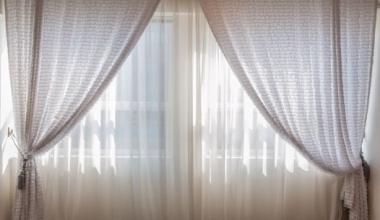
For homeowners who want acoustic benefits without sacrificing natural light, sheer acoustic fabrics offer a lightweight alternative. These are often micro-perforated or woven with a tight grid to capture mid- to high-frequency sounds. While they don't match the low-frequency absorption of heavy drapes, their NRC of 0.40–0.55 can improve speech clarity in small to medium rooms. Brands like AcousticLace™ combine a sheer face with a whisper-thin acoustic backing. Best suited for multi-purpose rooms where the theater doubles as a living area.
4. Composite Acoustic Panels (Curtains)
For the ultimate acoustic performance, composite curtain panels integrate multiple layers: a heavy outer fabric (often velvet or textured polyester), a high-density sound-absorbing core (fiberglass, recycled cotton, or melamine foam), and an optional blackout backing. These systems can achieve NRC ratings of 0.85–0.95, rivaling professional acoustic panels. They are heavier (500+ gsm) and require sturdy curtain tracks or rods. Commercial solutions like AcousticDrape™ offer custom stitching and pleating for optimal sound diffusion.
Comparison Table of Top Picks
| Fabric Type | NRC Rating | Weight (gsm) | Light Blocking | Best For | Approx. Price per Sq. Ft. |
|---|---|---|---|---|---|
| Velvet Acoustic | 0.80 – 0.85 | 400+ | High (with lining) | Dedicated theaters | $8 – $15 |
| Blackout Acoustic | 0.65 – 0.75 | 350+ | Complete | Projector rooms | $6 – $12 |
| Sheer Acoustic | 0.40 – 0.55 | 150 – 250 | Low | Multi-purpose rooms | $4 – $8 |
| Composite Panels | 0.85 – 0.95 | 500+ | Variable | Serious audiophiles | $12 – $25 |
How to Choose the Right Acoustic Fabric
Assess your room's specific issues. Use a sound meter to identify problematic echo areas; corners and back walls are key. For a room with hard floor and ceiling, prioritize high NRC fabrics like velvet or composite. If light control is critical, choose blackout or velvet with lining. For budget-conscious builds, sheer fabrics can be supplemented with bass traps. Always order fabric swatches to test appearance and feel under your screen's lighting.
Installation Tips for Maximum Benefit
- Install curtains as close to the ceiling as possible (floor-to-ceiling) and extend beyond the window edges (wall-to-wall).
- Use a double-track system: one for the acoustic curtain and one for a blackout lining, allowing independent operation.
- Allow fabric to pool on the floor by 2–4 inches to trap additional low-frequency sound.
- Pleat or gather the fabric to increase surface area and diffusion.
- For corners, use curved tracks to wrap panels around the room's perimeter.
Care and Maintenance
Preserve acoustic properties by following care labels: most acoustic fabrics are dry-clean only. Avoid washing velvet to prevent pile crushing. Vacuum gently with a soft brush attachment to remove dust. For blackout fabrics, spot clean with mild detergent and water. Do not iron directly on the acoustic layer; steam from a distance if needed. Re-hang after cleaning to maintain tension.
Budget Considerations
Prices vary widely. Velvet and composite fabrics are more expensive but offer superior performance. Sheer fabrics are affordable but less effective. Consider buying ready-made sizes or sewing custom panels if you have skills. Factor in professional installation for heavy composite panels. Long-term investment in good acoustic curtains can improve your audio system's perceived quality without upgrading speakers.
Where to Buy
Major fabric retailers and specialized acoustic supply stores carry these products. Online resources like Acoustic Curtains Inc. offer free swatches and technical support. Local drapery workrooms can also produce custom panels. Ensure the supplier provides NRC test reports and fire safety certifications.
Conclusion
Choosing the right home theater acoustic curtain fabric is a blend of science and aesthetics. velvet delivers classic luxury and high absorption; blackout provides total light control; sheer offers flexibility; and composite panels deliver professional-grade performance. Evaluate your room's acoustic needs, light requirements, and budget to select the top pick that transforms your space into an immersive cinema experience.