Why Curtain Fabric Width Matters More Than You Think
When buying curtain fabric, most people focus on color, texture, and opacity. But width is the first practical consideration that determines how much fabric you need, how your curtains will hang, and whether your project will feel luxurious or skimpy. In this in-depth guide, we break down everything you need to know about curtain fabric widths, from standard measurements to the best options for blackout, sheer, velvet, and acoustic curtains. By the end, you'll be able to measure, calculate, and choose the perfect fabric width with confidence.
___PROTECTED_1___
Understanding Curtain Fabric Widths
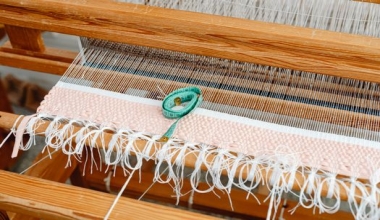
Curtain fabric is usually woven on looms with a fixed width, meaning the fabric comes off the roll as a long continuous yard, cut to length. The width of the roll is the horizontal dimension, typically measured in inches or centimeters. This is different from the drop (vertical length) you order. Standard widths vary by region and fabric type, but the most common ranges are:
- Narrow: 36 to 42 inches (90 to 107 cm)
- Medium: 54 to 60 inches (140 to 152 cm)
- Wide: 72 to 90 inches (183 to 229 cm)
- Extra-wide: 108 to 118 inches (274 to 300 cm)
In Europe, many sheer and semi-sheer fabrics are woven at 118 inches (300 cm) wide to allow floor-to-ceiling curtains without horizontal seams. In North America, 54-inch and 60-inch widths dominate the market. Understanding your fabric's width is essential because it directly affects how many widths of fabric you will need to cover your window.
___PROTECTED_2___
Standard Widths for Different Fabric Types
Blackout Curtain Fabrics
Blackout fabrics are typically made with a thick backing or tightly woven multiple layers. Most blackout curtain fabric rolls come in 54-inch to 60-inch widths. Some industrial blackout linings may be narrower (44-48 inches). However, triple-weave blackout fabrics often come in wider 72-inch and 118-inch widths for seamless installations. When choosing blackout fabric, check the width to avoid unnecessary seams that can let light leak through.
Sheer Curtain Fabrics
Sheers are often available in wider widths because they are meant to gather gracefully and are lighter. You'll find many sheers at 118 inches (300 cm) wide, especially in Europe. Standard sheer widths also include 50, 60, and 72 inches. The wide widths allow you to create elegant, floor-to-ceiling elegance with very little sewing. Always consider the fullness ratio—sheers typically need 2 to 3 times the window width for a nice drape.
Velvet Curtain Fabrics
Velvet is a heavier fabric, so the width is often limited by the loom and the weight. Traditional velvet is woven at 54 inches, but you'll also find 60-inch and 58-inch widths. Some luxury velvets come in 118 inches, but they are less common. Because velvet has a pile, you must be careful when sewing multiple widths together—the pile direction should match to avoid shading differences on the finished curtain.
Acoustic Curtain Fabrics
Acoustic (sound-absorbing) curtains are increasingly popular in offices, studios, and homes. These fabrics are designed with dense weaves and sometimes heavier weights. Widths vary widely from 54 to 118 inches. Acoustic fabrics with a 118-inch width are ideal for tall windows or room dividers, but many residential acoustic curtains are made from 60-inch fabric to match standard track sizes.
How to Measure for Curtain Fabric
Calculating the amount of fabric you need starts with measuring your window and deciding the desired fullness. Here's a step-by-step process:
- Measure the window width. Use a steel tape measure to get the exact width of your window frame or the area you want to cover.
- Add allowances. For a curtain that stacks back clear of the window when open, add 4-6 inches on each side. For a standard floor-length curtain, add 2-4 inches to the width for hem allowances on each side.
- Decide on fullness. Curtains look best when they are gathered. The fullness ratio is the total gathered width compared to the flat fabric width. For sheer curtains, use 2.5 to 3 times the window width. For blackout and velvet, 2 to 2.5 times is typical. For acoustic curtains, 1.5 to 2 times is common because they are often heavy.
- Calculate total width needed. Multiply the final window width (including allowances) by the fullness ratio. This gives you the total flat width of fabric required (before seams).
- Divide by the fabric roll width. Divide the total flat width by the fabric width (e.g., 54 inches). Round up to the nearest whole number. This tells you how many full widths of fabric you need.
- Multiply by the drop length. Determine your desired finished drop (distance from top of curtain to bottom). Add extra for hems (usually 6-8 inches total for top and bottom hems) and for pattern repeat matching if applicable. Multiply this adjusted drop by the number of widths to get the total length to order.
For example: A window is 60 inches wide. You add 10 inches for allowances, making 70 inches. For a fullness of 2, you need 140 inches of flat fabric. If your chosen fabric is 54 inches wide, you need 140 ÷ 54 = 2.59, so you round up to 3 widths. If the drop is 84 inches plus 8 inches for hems (92 inches), you order 3 × 92 = 276 inches, or about 7.67 yards.
Factoring in Pattern Repeat
When your curtain fabric has a pattern, you must buy extra to align the pattern across widths. The pattern repeat is the vertical distance between identical points in the design. For each width of fabric after the first, add one full pattern repeat to the drop length. For example, if the drop is 92 inches and the pattern repeat is 13 inches, you need to cut each width at 105 inches (92 + 13) for matching. This becomes crucial when using wide windows and multiple panels. Always ask your supplier for the pattern repeat measurement before ordering.
Common Widths and Their Uses
| Fabric Width | Typical Use | Advantages |
|---|---|---|
| 36-42 inches | Sheer panels, small windows, café curtains | Economical, easy to handle |
| 54 inches | Standard curtains for most windows, blackout linings | Widely available, fits standard tracks |
| 60 inches | Curtains for wider windows, velvets, some blackout fabrics | Fewer seams, more coverage |
| 72 inches | Floor-to-ceiling curtains, acoustic curtains | Reduces number of widths needed |
| 90-100 inches | Large sliding doors, room dividers | Minimal seaming, dramatic drape |
| 118 inches | European sheers, very tall windows | Often allows single-width curtains |
Choosing the widest possible width can reduce labor costs if you are having curtains professionally made, because fewer panels and seams are needed. But extra-wide fabrics can be harder to handle at home, and hemming becomes more challenging due to weight.
Curtain Width vs. Length: Getting the Ratio Right
Width is not the same as length. Many people confuse the “width” on a fabric roll with the finished width of the curtain. A common mistake is ordering fabric equal to the window width, ignoring fullness. This results in flat, lifeless curtains. For a luxurious look, always multiply your track width by at least 1.8 to 2.5. For blackout curtains, a fullness of 2.2 is recommended to block light effectively while still looking gathered. For sheer curtains, you can go up to 3 times for a beautiful, frothy effect. Velvet is heavy, so a fullness of 2 is enough to avoid excessive bulk. Acoustic curtains need a balance between fullness and sound absorption; too much gathering can actually reduce the fabric's ability to absorb sound waves, so stick to 1.5 to 2.
Custom Widths vs. Standard Rolls
Most manufacturers produce standard roll widths, but you can also order custom widths if you have specific requirements. Custom-width weaving is more expensive and requires a minimum order quantity, usually several hundred meters. For most residential and commercial projects, standard widths are perfectly suitable. However, if you have an unusually wide window (over 120 inches), you might consider sewing two widths together. Alternatively, you can use a decorative vertical seam to turn the join into a design feature. Always ask for a sample to check the exact width and quality before committing.
Practical Tips for Buying Curtain Fabric by Width
- Always check the actual width from the supplier. Nominal widths can vary by a few inches. For precise cutting, order fabric with the actual width printed on the label.
- Add extra to your width calculation for seams. Account for 1-2 inches per seam, especially when joining widths.
- Consider the fabric's selvedge. The self-finished edges might need to be trimmed; include 1/2 to 1 inch per edge in your calculations.
- Order a little more than needed. A 10% overage is recommended to cover mistakes and future repairs.
- Check if the fabric is stretchy or has a nap. For velvet, ensure all widths face the same direction to avoid color variation.
- For blackout fabrics, verify the width of the actual blackout layer. Some blackout coatings reduce the usable width, so ask the supplier for the maximum cutting width.
Conclusion
Understanding curtain fabric width is the foundation of any successful curtain project. Whether you are sewing simple sheers or luxurious velvets, knowing how to calculate widths, add fullness, and account for pattern repeats will save you money and frustration. Always start by measuring your window, choosing the right fullness ratio, and then selecting a fabric width that minimizes seams while fitting your design. With the guidance in this article, you are ready to order curtain fabric with confidence and create stunning, professional-looking curtains.