1. Understand Acoustic Performance (NRC Rating)
When selecting acoustic curtains for an office, the Noise Reduction Coefficient (NRC) is the most critical metric. NRC measures how much sound a material absorbs on a scale from 0 to 1. For commercial spaces, look for curtains with an NRC of 0.6 or higher to effectively dampen ambient noise. However, note that higher NRC often comes with thicker, heavier fabrics that may require stronger tracks.
Consider the specific noise sources in your office: human chatter, HVAC hum, or external traffic. Acoustic curtains are most effective at absorbing mid to high frequencies, so they work well for conversations but may need supplementation for low-frequency sounds. Always check third-party lab tests rather than manufacturer claims alone. Pairing curtains with other acoustic treatments like ceiling tiles can enhance overall performance.
___PROTECTED_1___
2. Fabric Types and Their Impact
The fabric composition directly influences sound absorption. Velvet, felt, and multi-layer weaves are popular choices. Velvet offers a dense pile that traps sound waves, while felt (often made from recycled polyester) provides eco-friendly acoustic benefits. Some curtains combine a blackout layer with acoustic batting for dual functionality. For offices, choose fabrics with a tight weave and substantial weight—at least 300 grams per square meter.
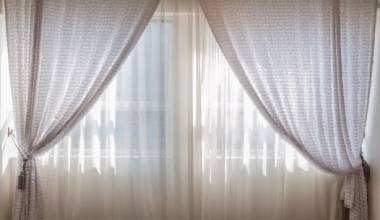
Sheer fabrics are not ideal for acoustic purposes due to their openness. If light filtering is needed, consider a dual-track system with a sheer for daytime and an acoustic curtain for night or privacy. Flame-retardant treatments are essential for commercial compliance; ensure the fabric meets local fire codes. Test fabric samples with a sound meter in your actual environment before bulk ordering.
___PROTECTED_2___
3. Curtain Weight and Thickness
Heavier curtains generally absorb more sound, but thickness also matters. A curtain that is 1.5 inches thick with appropriate mass can significantly reduce noise transmission. For open-plan offices, thicker curtains at partition edges prevent sound from flanking around. However, excessive weight may strain manual systems, so consider motorized tracks for large installations.
The weight affects pleating and draping. Pinch pleats or ripple folds can be used, but ensure the fabric’s weight is compatible with the chosen header style. For floor-to-ceiling installations, heavy fabrics must be properly anchored to avoid sagging. A rule of thumb: the curtain should be at least 1.5 times the window width to ensure proper fullness and acoustic coverage.
4. Fire Safety Standards
Commercial buildings require fire-resistant materials. In the US, NFPA 701 is the standard; in Europe, EN 13773 or DIN 4102 apply. Acoustic curtains must meet these certifications to pass inspections. Many manufacturers offer inherently flame-retardant fabrics, which maintain their properties after cleaning, versus topically treated ones that may degrade over time.
Request certification documents and verify samples with local fire marshals if needed. Specialized coatings can add fire resistance but may affect acoustic performance, so balance both requirements. Remember that tracks and hardware also need to be fire-rated in some jurisdictions. Investing in certified curtains avoids costly retrofits later.
5. Installation and Track Systems
Proper installation is key to acoustic effectiveness. Bottom seals, side channels, and overlap at the center prevent sound leaks. For offices, recessed tracks with a return to the wall create a labyrinth seal. Ceiling-mounted tracks work well for floor-to-ceiling curtains, while wall-mounted tracks are simpler but may have gaps.
Consider motorization for large or frequently used curtains. Smart systems can integrate with lighting and HVAC controls for energy efficiency. Manual systems with sturdy cords are still common for smaller spans. Ensure the track is rated for the curtain’s weight and that the wall anchors can support the load. Professional installation is recommended to guarantee the acoustic seal.
6. Light Control and Blackout Options
Many offices need blackout curtains for AV presentations or shift workers. Acoustic curtains can be combined with a blackout liner—either as a separate layer or integrated. Integrated options save space but may reduce acoustic performance slightly due to the liner’s stiffness. Layered systems allow independent operation for light vs. sound control.
Check the light leakage rating: 100% blackout requires overlapping panels, side tracks, and bottom weights. For partial light control, lined curtains with a light-blocking coating suffice. Consider automated scheduling to lower curtains during specific hours to reduce glare and improve acoustics when needed. Remember that blackout liners also add thermal insulation, contributing to energy savings.
7. Maintenance and Cleaning
Commercial curtains accumulate dust and odors over time, affecting both appearance and acoustic performance. Vacuum gently with a brush attachment regularly. Most acoustic fabrics are dry-clean or spot-clean only; verify care instructions. Some materials are machine-washable but may shrink or lose fire resistance. Plan for periodic professional cleaning every 1-2 years.
Stain-resistant coatings can prolong the life of curtains in high-traffic areas. Avoid harsh chemicals that might degrade acoustic properties. Keep spare panels or sectioned treatments to allow rotation for even wear. Maintenance contracts with suppliers can simplify upkeep for large offices.
8. Cost vs. Value
Acoustic curtains range from $20 to over $100 per linear foot, depending on fabric, size, and certifications. Labor and hardware add to costs. For a typical conference room, expect $500–$1,500. While cheaper options exist, they may lack acoustic efficacy or durability. Consider total cost of ownership including cleaning and replacement cycles.
Calculate return on investment through improved productivity and reduced absenteeism from noise-related stress. For open offices, curtains can replace expensive partitions at lower cost. Bulk purchases often yield discounts. Get multiple quotes and ask for detailed breakdowns. Financing options may be available for large projects.
9. Aesthetic Considerations
Acoustic curtains need not look utilitarian. Modern fabrics come in a wide range of colors, patterns, and textures that tie into office branding. Velvet in deep hues adds sophistication, while neutral felt blends with minimalist designs. Acoustic panels can be printed with logos or art for dual function.
Consider the office layout: floor-to-ceiling curtains create a dramatic statement and maximize sound absorption. For a subtle look, motorized curtains that retract into pockets are sleek. Coordinate with existing furniture and wall colors to maintain a cohesive environment. Samples are essential to judge color and texture under your lighting.
10. Warranty and Support
Commercial curtain products should come with a warranty covering manufacturing defects and sometimes fading. Typical warranties range from 5 to 10 years. Read the fine print on what’s excluded—such as damage from improper cleaning or modifications. The supplier should provide installation guidance and after-sales support.
Choose manufacturers with a reputation for durability and customer service. Ask for case studies of similar office installations. A strong warranty indicates confidence in product longevity. Keep records of installation and care instructions for future reference. This ensures you get the most out of your investment in acoustic curtains.