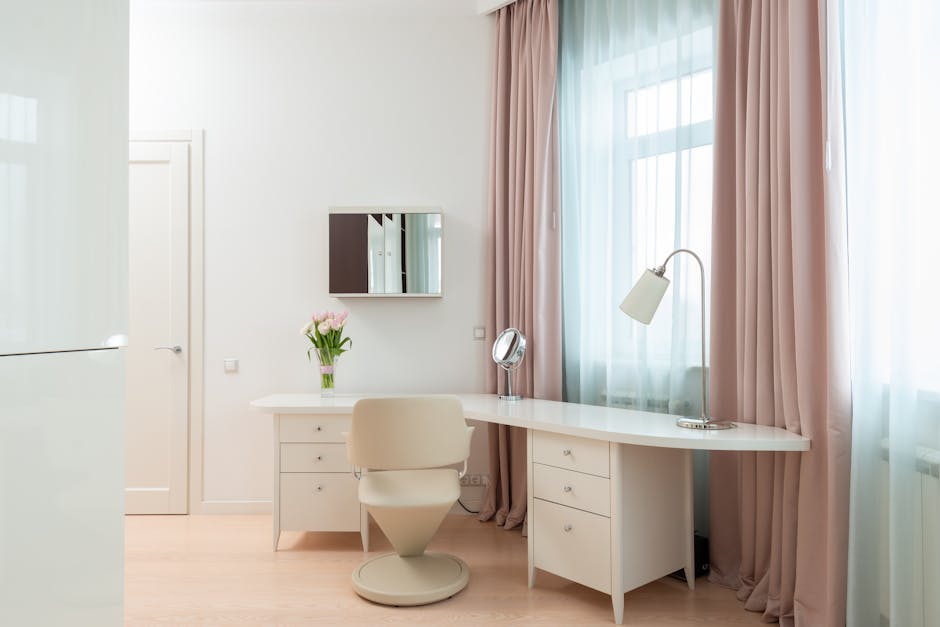
Understanding Your Home Office Needs
Before diving into fabric options, assess your home office environment. Key questions: How much natural light enters the room? Do you face screen glare during peak hours? Is privacy a concern (e.g., ground floor or street-facing windows)? Are you distracted by outside noise (traffic, neighbors, lawn mowers)? Do you need to regulate temperature to maintain comfort? Your answers will guide fabric selection.
Light Control and Screen Glare
Harsh sunlight can cause eye strain and reduce screen visibility. Sheer curtains diffuse light softly, while blackout fabrics eliminate it entirely. For digital workers, a layered approach—sheer under blackout—offers flexibility.
Privacy Needs
If your home office faces a busy street or shared courtyard, privacy becomes a top priority. Velvet and blackout curtains offer 100% privacy when drawn, while sheers provide daytime privacy by obscuring view without blocking light.
Noise Reduction
Sound disturbances affect concentration. Acoustic curtains are designed to dampen noise, but heavy velvet and layered blackout fabrics also absorb some sound. For ultimate quiet, consider acoustic panels alongside curtains.
___PROTECTED_1___
Key Curtain Fabric Types for Home Offices
Blackout Curtains
Blackout fabrics are woven tightly and often backed with a special coating (e.g., foam or acrylic) to block 100% of light. They are ideal for rooms used for video calls, sleeping if you nap, or high-glare situations. Pros: maximum light control, insulation, privacy. Cons: can feel heavy, limited color options in true blackout. Best for: east/west facing windows, shift workers.
Sheer Curtains
Sheer fabrics (linen, polyester blends, cotton) are lightweight and translucent. They reduce glare while maintaining a connection to the outdoors. Pros: airy aesthetic, soft natural light, affordable. Cons: minimal privacy at night, no noise reduction. Best for: layering under heavier curtains, small offices where you want daylight.
Velvet Curtains
Velvet is a plush, densely woven fabric (cotton, polyester, or silk). Its thickness provides moderate light blocking and excellent insulation against heat/cold. Pros: luxurious look, thermal efficiency, upscale texture. Cons: attracts dust, requires special cleaning, can be heavy on rods. Best for: home offices with a traditional or glam décor, cold climates.
Acoustic Curtains
Acoustic curtains are engineered to absorb sound waves through dense, multi-layered construction (often including felt or mass-loaded vinyl). Pros: significant noise reduction (up to 50%), improved concentration. Cons: higher cost, limited styles, may require reinforced hardware. Best for: offices near busy roads, open‑plan living, or shared walls.
___PROTECTED_2___
Comparing Fabric Features at a Glance
| Feature | Blackout | Sheer | Velvet | Acoustic |
|---|---|---|---|---|
| Light Blocking | 100% | 10-30% | 70-85% | 50-80% |
| Noise Reduction | Low-Moderate | None | Moderate | High |
| Insulation | High | Low | High | Moderate |
| Privacy | Complete | Partial (day) | Complete | Complete |
| Maintenance | Easy (spot clean) | Machine washable | Dry clean only | Spot clean only |
| Cost per panel | $$ – $$$ | $ – $$ | $$$ – $$$$ | $$$$ |
Measuring and Sizing Your Curtains
Accurate measurements ensure full coverage and professional finish. Width: For light control, measure the window frame width and multiply by 1.5‑3 for gathering. A rule of thumb: for blackout curtains, use 2x the width to eliminate side light gaps. Length: Decide whether you want curtains that kiss the floor (1‑2 cm above) or pool on the floor (5–10 cm extra). Consider ceiling-mounted rods to make the room appear taller. Pro tip: For home offices, choose curtains that extend 10–15 cm beyond the window on each side to block side light and enhance privacy.
Layering for Maximum Flexibility
The most versatile home office window treatment combines two fabric types: sheer + blackout or sheer + velvet. Use a double rod or a track system. During the day, pull back the blackout to enjoy diffused light through sheers. For video calls or intense focus, draw both layers for a dark, quiet environment. This also allows you to adjust for different times of day and seasonal changes.
Care and Maintenance Tips
- Blackout: Vacuum monthly with a soft brush attachment. Spot clean stains with mild soap and water. Avoid machine washing unless the label permits—back coating can crack.
- Sheer: Machine wash on delicate cycle in a lingerie bag, cold water. Hang to dry to prevent shrinkage. Iron on low if needed.
- Velvet: Dry clean only. Between cleanings, use a garment steamer to remove wrinkles and fluff the pile. Keep away from direct sunlight to prevent fading.
- Acoustic: Dust gently with vacuum and upholstery tool. For deeper cleaning, consult the manufacturer—many are not washable. Use a lint roller for pet hair.
Real-World Application Cases
Case 1: Ground‑Floor Home Office in a City Apartment
A designer working from home faced constant glare from a south‑facing window and noise from street level. Solution: blackout curtains with a thermal liner and a set of acoustic panels behind the curtain rod. Result: reduced glare by 100%, noise dropped by 40%, and privacy was ensured even at night.
Case 2: Shared Living‑Room Office with Natural Light Needs
A remote consultant needed a home office corner that didn't feel closed off from the family. They installed a double rod with white sheers (light, airy) and light‑blocking linen curtains in neutral beige. During calls, they draw the linen; otherwise, sheers create an open feel. Maintenance: weekly machine wash of sheers.
Case 3: Attic Office with Temperature Swings
A freelance writer used a converted attic room that got hot in summer and cold in winter. They chose thick velvet curtains with a thermal backing. The curtains not only added a cozy library vibe but also improved energy efficiency—reducing heating/cooling costs by 15%. Velvet’s density also absorbed echoes from the sloped ceiling.
Final Thoughts: Making Your Choice
Your home office curtain fabric should balance light, privacy, noise, and aesthetic comfort. For most people, a layered system of sheers plus blackout or velvet offers the best flexibility. If noise is your primary concern, invest in acoustic curtains or combine with heavy velvet. Always measure twice and consider custom sizing for a seamless look. With the right fabric, you can transform your home office into a productive, comfortable sanctuary.