When outside noise disrupts your peace—from traffic rumble to loud neighbors—curtains can become your first line of defense. Not all fabrics perform equally, however. This guide unpacks the science, materials, and installation tricks that turn a simple window treatment into an effective sound barrier. Whether you're outfitting a home theater, a bedroom, or a busy open-plan office, choosing the right curtain fabric for noise reduction can dramatically lower decibel levels and improve your quality of life.
Understanding Noise Reduction and Curtains
Sound travels as vibrations through the air and materials. Curtains reduce noise primarily through absorption (dampening the sound waves that hit them) and mass loading (blocking sound from passing through). The key metrics are:
- STC (Sound Transmission Class) – measures how well a material reduces airborne sound. Higher numbers = better blocking.
- NRC (Noise Reduction Coefficient) – indicates how much sound a material absorbs (0 to 1). Curtains rarely exceed 0.6 NRC alone.
- Mass per unit area – heavier fabrics (e.g., velvet) naturally block more sound.
Remember: curtains reduce but rarely eliminate noise. They excel at dampening mid- to high-frequency sounds (voices, TV, traffic), while low-frequency bass may still pass through.
___PROTECTED_1___
Key Factors That Affect Soundproofing Performance
Fabric Density and Weight
Heavier fabrics (350 g/m² or more) block more sound because mass resists vibration. Light sheers offer negligible noise reduction.
Thickness and Pile Height
Thicker materials—especially those with a dense weave or long pile (like velvet)—trap air pockets that absorb sound energy. A 3–5 mm thick curtain outperforms a thin cotton.
Multiple Layers and Air Gaps
Two layers of fabric with an air gap between them create a “sound sandwich” that outperforms a single heavy layer. Mounting curtains 2–3 inches away from the window allows sound waves to dissipate.
Sealing and Coverage
Any gap at the top, sides, or bottom lets noise bypass the curtain. Floor-to-ceiling and wall-to-wall coverage is essential for maximum reduction.
___PROTECTED_2___
Best Fabric Types for Noise Reduction
Velvet
Velvet’s dense pile and high mass make it one of the best natural noise absorbers. It can reduce sound by 6–10 dB depending on thickness and lining. Velvet also adds a luxurious feel, ideal for bedrooms and home theaters.
Blackout Curtains with Triple Weave
Modern blackout curtains often use a tightly woven fabric plus a foam or acrylic backing. The added mass and air-blocking layer help reduce outside noise, especially when paired with a heavy front fabric.
Acoustic Curtains (Commercial Grade)
These are purpose-built with fiberglass or mineral wool core layers and a dense outer fabric. They can achieve NRC 0.6–0.8 and STC 15–20. Costs are higher, but performance is unmatched for recording studios or open offices.
Sheer and Lightweight Fabrics
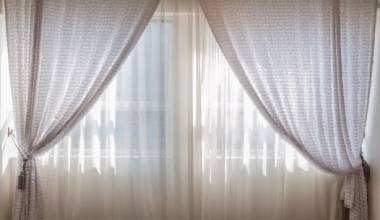
While not effective alone, sheers can be used as an outer layer to add visual appeal while a heavier interliner does the acoustic work. For maximum noise reduction, avoid relying solely on sheers.
Construction and Lining Features
Interlinings
An interlining is an extra layer sewn between the face fabric and the lining. Flannel, cotton batting, or felt-based interlinings dramatically increase sound absorption. Look for curtains with a “Blackout + Acoustic” interlining.
Multiple Passes
Some high-end acoustic curtains use two or three separate fabric panels on one track. The air gaps between them trap sound. This is common in theater curtains.
Backings
Acrylic foam backing (often found in blackout curtains) adds mass and seals the fabric, preventing sound leaks. Ensure the backing is Oeko-Tex certified for safety.
How to Maximize Soundproofing with Installation
- Floor-to-ceiling mounts – Extend the curtain track to the ceiling to eliminate gaps.
- Wall-to-wall coverage – Cover the entire wall area around the window, not just the glass.
- Use a triple-pleat or pinch-pleat header – creates more fabric density and traps air.
- Seal the edges – Add magnetic strips or velcro at the sides and bottom to seal against the wall or floor.
- Layer two curtains – A heavy velvet outer curtain plus a lined blackout inner curtain can cut noise by 12–15 dB.
Comparing Fabrics: A Quick Reference Table
| Fabric Type | Thickness (mm) | Weight (g/m²) | Typical Noise Reduction | Cost per m |
|---|---|---|---|---|
| Sheer (polyester) | < 1 | 80–120 | 1–2 dB | $ |
| Cotton duck | 2–3 | 250–350 | 3–5 dB | $$ |
| Velvet (cotton/poly) | 4–6 | 400–600 | 6–10 dB | $$$ |
| Acoustic curtain (commercial) | 8–12 | 700–1100 | 10–15 dB | $$$$ |
Additional Tips for Enhancing Noise Control
- Use drapery weights at the bottom hem to keep the fabric taut against the floor.
- Combine curtains with thick rugs, upholstered furniture, and acoustic panels for a balanced room treatment.
- If installing in a rental, consider tension rod systems that allow easy removal while maintaining coverage.
- For double-layer setups, hang the heavier curtain closer to the window and the decorative one on the room side.
- Wash or dry-clean curtains regularly – dust buildup can reduce absorbent properties.
Choosing the right curtain fabric for noise reduction isn't about a single magic material—it's a combination of mass, layering, and meticulous installation. velvet and heavy blackout fabrics are excellent for most homes, while commercial acoustic curtains serve demanding spaces. Start by assessing your noise issue (the frequency and volume), then match the fabric and installation technique accordingly. With the right curtain solution, you can reclaim the quiet you deserve.